


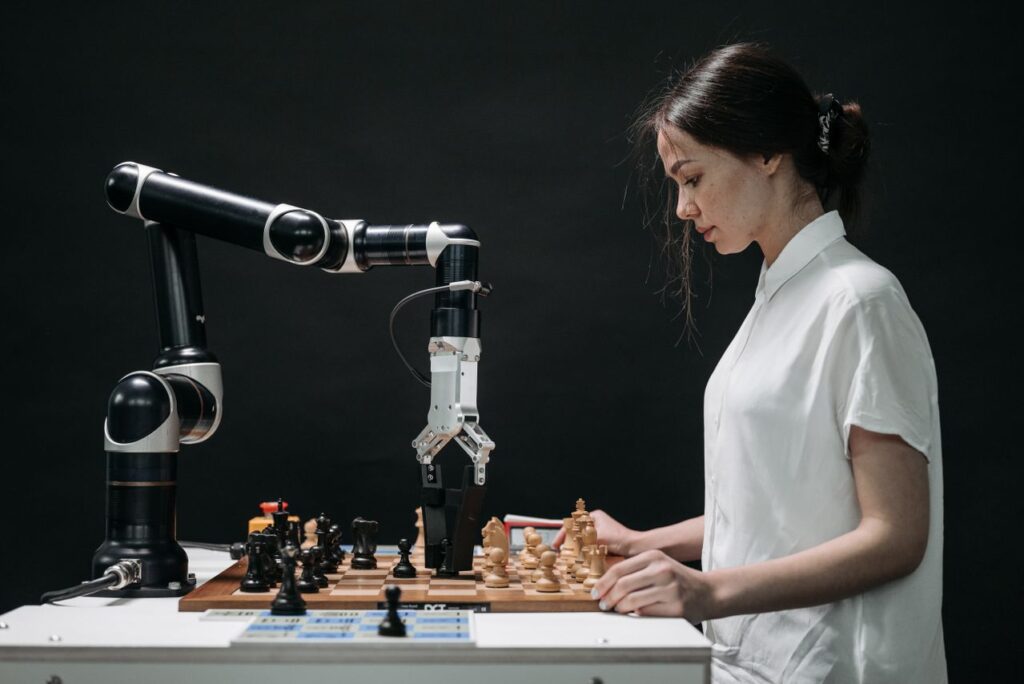
Artificial Intelligence (AI) is one of the most transformative technologies in modern history. It is often compared with human intelligence because both can solve problems, learn, and make decisions. However, they work in very different ways.
Understanding the differences between AI and human intelligence is important as AI becomes more advanced and integrated into everyday life.
This guide explains the key differences and future impact of AI vs human intelligence in a simple and clear way.
What Is Artificial Intelligence?
AI refers to computer systems designed to perform tasks that normally require human intelligence. These include:
- Learning from data
- Recognizing patterns
- Making predictions
- Understanding language
- Automating tasks
AI is powered by algorithms and data, not emotions or consciousness.
What Is Human Intelligence?
Human intelligence is the natural ability of people to think, learn, reason, and understand the world. It includes:
- Emotional understanding
- Creativity
- Critical thinking
- Problem-solving
- Social interaction
Unlike AI, human intelligence is shaped by experience, emotions, and consciousness.
Key Differences Between AI and Human Intelligence
1. Learning Ability
- AI: Learns from large datasets and improves through training
- Humans: Learn from experience, observation, and education
AI can process more data faster, but humans learn more flexibly in real-world situations.
2. Speed of Processing
- AI: Processes information extremely fast
- Humans: Slower but more thoughtful in complex situations
AI is ideal for analyzing large amounts of data quickly.
3. Decision-Making
- AI: Makes decisions based on patterns and data
- Humans: Use logic, emotions, ethics, and experience
Human decisions often consider moral and emotional factors that AI cannot fully understand.
4. Creativity
- AI: Can generate content, designs, and ideas based on learned patterns
- Humans: Create original ideas driven by imagination and emotion
AI supports creativity, but human creativity is still more original and intuitive.
5. Emotional Intelligence
- AI: Has no real emotions or empathy
- Humans: Understand and express emotions naturally
This makes humans essential in roles involving care, leadership, and relationships.
6. Accuracy and Consistency
- AI: Highly accurate and consistent in repetitive tasks
- Humans: More prone to errors due to fatigue or distraction
AI is better for tasks requiring precision and repetition.
7. Adaptability
- AI: Limited to its training data and programming
- Humans: Can adapt to new and unexpected situations easily
Humans are more flexible in unpredictable environments.
AI vs Human Intelligence Comparison (Overview)
How AI and Humans Work Together
Instead of replacing humans, AI is often used to support human intelligence. This collaboration is becoming more common in many industries.
Examples of Collaboration
- Doctors using AI for faster diagnosis
- Writers using AI for content ideas
- Businesses using AI for data analysis
- Teachers using AI for personalized learning
AI handles data-heavy tasks, while humans provide judgment and creativity.
Future Impact of AI vs Human Intelligence
1. Increased Collaboration
The future will focus on humans and AI working together rather than competing. AI will become a tool that enhances human ability.
2. Job Transformation
Some repetitive jobs may be automated, but new roles will emerge in:
- AI development
- Data science
- Cybersecurity
- AI ethics and management
3. Smarter Decision-Making
AI will help humans make better decisions by providing faster and more accurate insights.
4. Ethical Challenges
As AI becomes more powerful, society must address:
- Privacy concerns
- Bias in AI systems
- Responsible use of technology
5. Expansion of AI in Daily Life
AI will become more integrated into:
- Healthcare
- Education
- Transportation
- Business
- Communication
Will AI Replace Human Intelligence?
The short answer is no. AI is powerful, but it lacks emotions, consciousness, and true understanding.
Instead of replacing humans, AI is designed to:
- Assist humans
- Increase productivity
- Improve decision-making
- Automate repetitive tasks
Human intelligence remains essential for creativity, ethics, and emotional understanding.
Conclusion
The comparison of AI vs human intelligence shows that both have unique strengths. AI excels in speed, accuracy, and data processing, while humans excel in creativity, emotion, and adaptability.
In the future, the greatest success will come from combining both—using AI to enhance human intelligence rather than replace it.
As AI continues to evolve, understanding this balance will be key to shaping a smarter and more efficient world.