


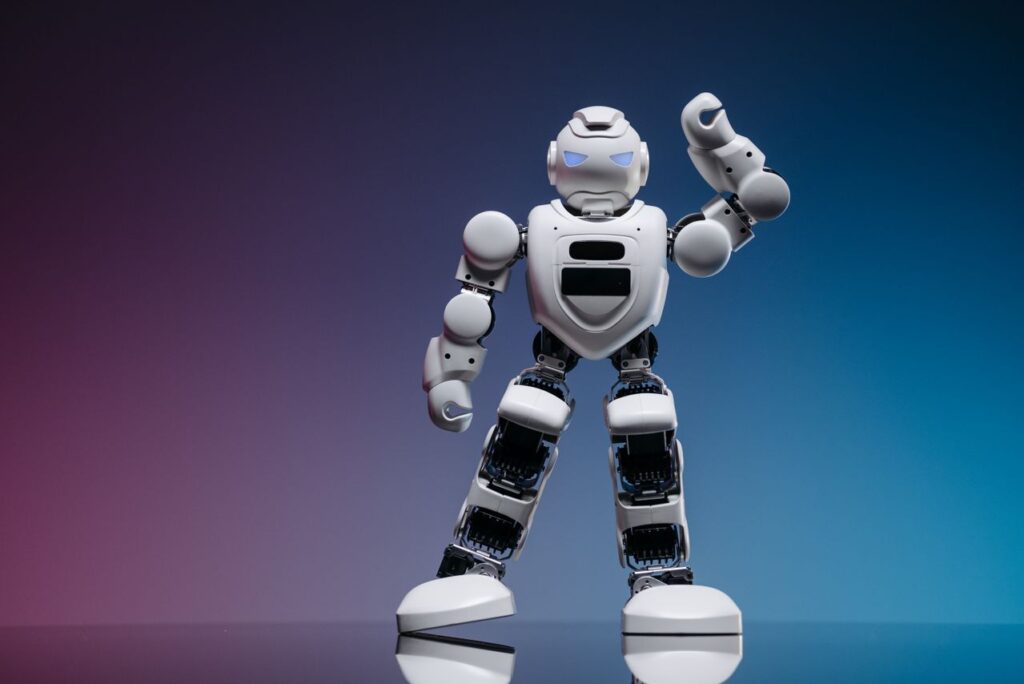
Artificial Intelligence is advancing at an incredible pace, transforming industries, economies, and everyday life. What seemed like science fiction a decade ago has become reality, with AI now powering everything from virtual assistants and smart devices to healthcare systems and business operations.
As we move toward 2030, experts predict that Artificial Intelligence will become even more powerful, accessible, and integrated into daily activities. While no one can predict the future with complete certainty, several trends are already shaping the next generation of AI technologies.
In this article, we’ll explore the future of Artificial Intelligence and the key predictions that could define the world by 2030.
Why Artificial Intelligence Is Evolving So Quickly
The rapid growth of Artificial Intelligence is driven by several factors:
- Increased computing power
- Access to massive amounts of data
- Advances in machine learning
- Improved cloud infrastructure
- Growing business investment
These developments allow AI systems to learn faster, process information more accurately, and perform increasingly complex tasks.
Prediction 1: AI Will Become a Daily Personal Assistant
By 2030, Artificial Intelligence is expected to function as a highly personalized digital assistant for millions of people.
Instead of simply answering questions, AI assistants may:
- Manage schedules automatically
- Handle routine communications
- Organize personal finances
- Monitor health information
- Recommend important daily actions
These assistants will likely understand user preferences more deeply and provide proactive support throughout the day.
Prediction 2: Artificial Intelligence Will Transform Healthcare
Healthcare is expected to experience one of the biggest AI revolutions.
Future AI systems may help doctors:
- Detect diseases earlier
- Create personalized treatment plans
- Analyze medical images instantly
- Predict patient risks
- Accelerate drug development
Artificial Intelligence could improve healthcare access while reducing costs and increasing diagnostic accuracy.
Prediction 3: AI-Powered Education Will Become Mainstream
Education is moving toward personalized learning experiences, and Artificial Intelligence will play a major role.
By 2030, AI tutors may:
- Adapt lessons to individual students
- Identify learning difficulties early
- Provide real-time feedback
- Create customized study plans
- Support lifelong learning
Students could receive a more effective and engaging educational experience than traditional one-size-fits-all methods.
Prediction 4: Businesses Will Rely Heavily on AI
Artificial Intelligence is already transforming business operations, but its role will become even larger by 2030.
Organizations may use AI for:
- Customer service automation
- Data analysis
- Marketing optimization
- Financial forecasting
- Supply chain management
Businesses that successfully integrate AI are likely to gain significant competitive advantages.
Prediction 5: Smarter Cities Will Emerge
Many governments are investing in smart city initiatives powered by Artificial Intelligence.
Future cities may use AI to:
- Manage traffic flow
- Improve public transportation
- Reduce energy consumption
- Enhance public safety
- Optimize waste management
These technologies could create more efficient and sustainable urban environments.
Prediction 6: AI Will Improve Cybersecurity
As cyber threats become more advanced, Artificial Intelligence will become a critical defense tool.
Future AI systems may:
- Detect attacks in real time
- Predict security vulnerabilities
- Automate threat responses
- Monitor network activity continuously
This could significantly strengthen digital security for businesses and individuals.
Prediction 7: Human-AI Collaboration Will Increase
Contrary to popular fears, many experts believe AI will work alongside humans rather than replace them entirely.
Artificial Intelligence will likely handle repetitive and data-intensive tasks while humans focus on:
- Creativity
- Leadership
- Critical thinking
- Strategic decision-making
- Emotional intelligence
This collaboration could boost productivity across many industries.
Prediction 8: AI-Generated Content Will Become More Advanced
Content creation tools powered by Artificial Intelligence are improving rapidly.
By 2030, AI may generate:
- Articles
- Videos
- Graphics
- Presentations
- Interactive experiences
Businesses and creators will use these tools to produce high-quality content more efficiently while maintaining human oversight.
Prediction 9: Autonomous Transportation Will Expand
Self-driving technology continues to develop, and Artificial Intelligence remains at its core.
Future transportation systems may include:
- Autonomous vehicles
- Smart logistics networks
- AI-managed traffic systems
- Automated delivery services
These innovations could reduce accidents, improve efficiency, and lower transportation costs.
Prediction 10: Ethical AI Will Become a Global Priority
As Artificial Intelligence becomes more powerful, governments and organizations will place greater emphasis on responsible AI development.
Key areas of focus may include:
- Data privacy
- Transparency
- Fairness
- Accountability
- Security
Strong regulations and ethical frameworks will help ensure that AI benefits society while minimizing potential risks.
Challenges Facing Artificial Intelligence
Despite its enormous potential, Artificial Intelligence still faces several challenges:
Data Privacy
AI systems often rely on large amounts of user data, creating concerns about privacy and information security.
Job Market Changes
Automation may replace some routine jobs while creating demand for new skills and professions.
Ethical Concerns
Questions about bias, transparency, and responsible AI use will remain important as technology advances.
Security Risks
Powerful AI systems must be protected from misuse and cyber threats.
Addressing these challenges will be critical for sustainable AI growth.
What Will Artificial Intelligence Look Like in 2030?
By 2030, Artificial Intelligence is expected to be more integrated, intelligent, and accessible than ever before. AI technologies will likely become a natural part of daily life, helping individuals and organizations make better decisions, improve efficiency, and solve complex problems.
Rather than being limited to technology companies, AI will become a standard tool across healthcare, education, business, transportation, finance, and countless other sectors.